

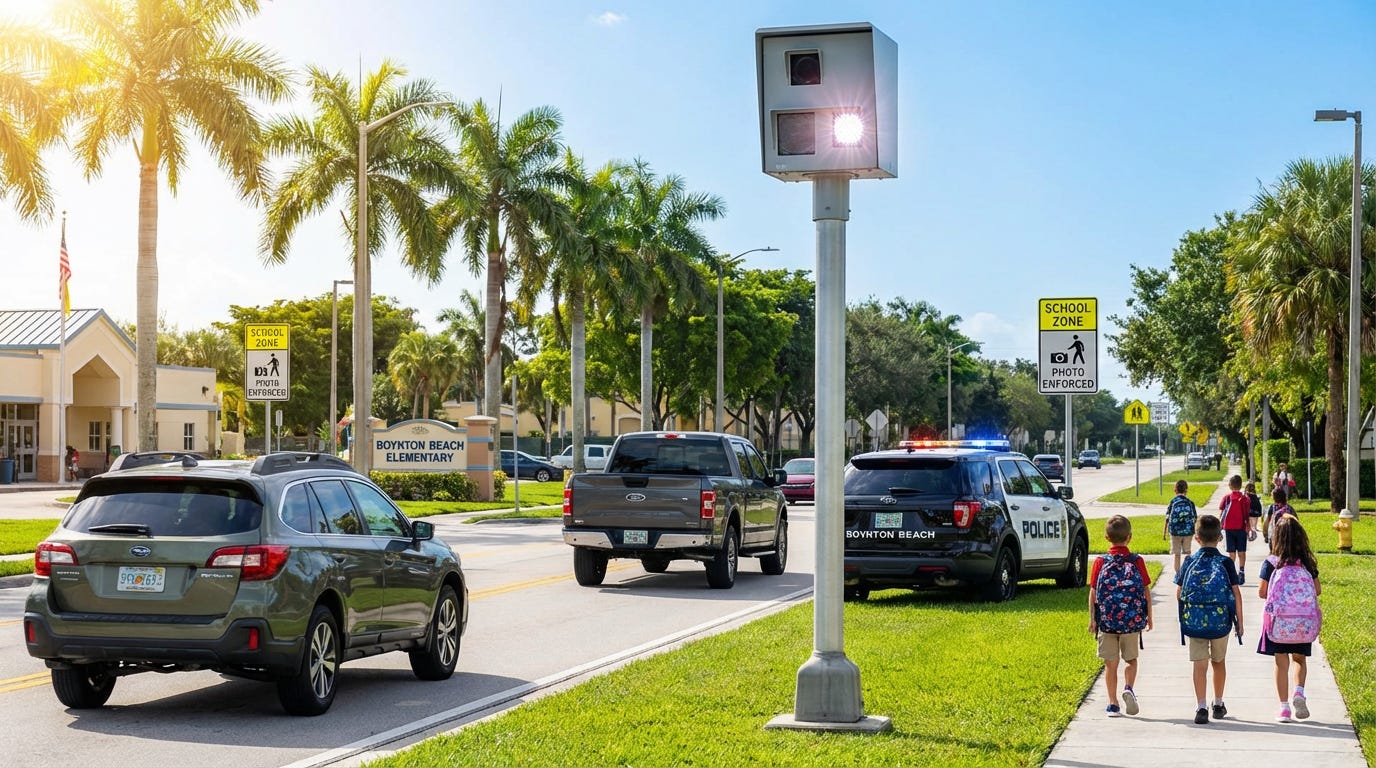
Across Boynton Beach and Palm Beach County, automated speed cameras in school zones have quickly become one of the most controversial issues on local roads. Over the past six months, frustration among drivers has been growing—not simply because the cameras are catching people speeding, but because many residents believe the system itself is unfair.
In September 2025, the city activated 18 automated speed enforcement cameras at seven elementary schools in Boynton Beach. The goal was straightforward: slow drivers down and improve safety for children during school hours. Since then, however, the cameras have issued a steady stream of citations to drivers exceeding the posted limit.
Under the current rules, motorists caught traveling 10–11 miles per hour over the limit can receive a $100 civil citation mailed directly to their home. The violation does not add points to a driver’s license and does not affect insurance rates, but the fines can quickly add up. For many residents, the growing number of tickets—and the speed at which they arrive in the mail—has raised concerns about whether the system is truly about safety or simply revenue.
Critics say the biggest problem is how the cameras operate. Unlike traditional school zones that rely on flashing lights to signal reduced speed limits, the cameras can issue citations even when the warning lights are not flashing. As long as signage indicates the presence of a school zone, enforcement can still occur. Drivers have told local media outlets that this creates confusion, particularly for those accustomed to slowing down only when lights are active.
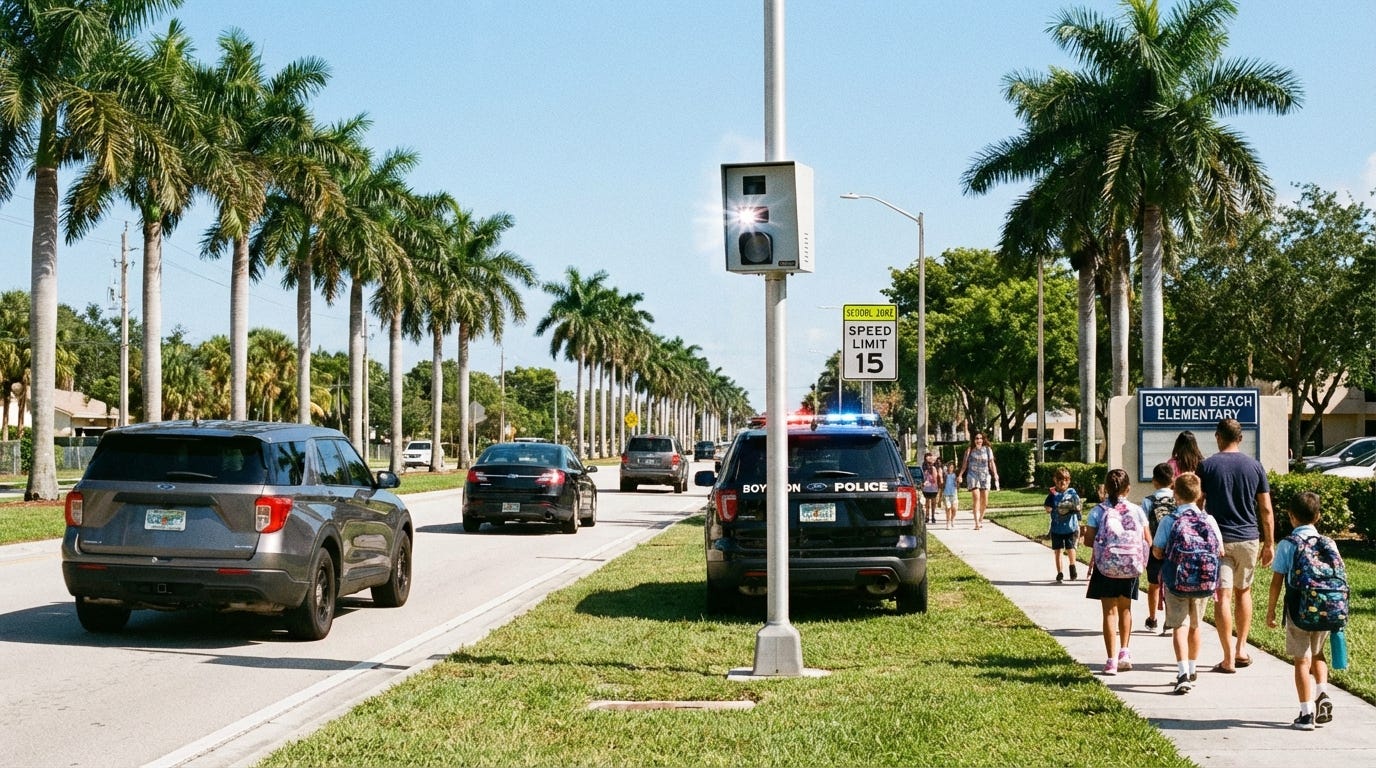
Another concern is the lack of human judgment in automated enforcement. With a camera doing the monitoring, drivers can be cited without ever realizing they violated the rule. There is no officer present to consider circumstances or issue a warning. For many motorists, the first sign of trouble is a ticket arriving weeks later in the mail.
Residents also report that challenging citations rarely leads to success. Even when drivers claim signage is unclear or point to possible technical glitches, they say the appeals process can feel stacked against them. Some drivers have managed to win their cases, but doing so often requires taking time off work and appearing in court—an inconvenience many people simply choose to avoid.
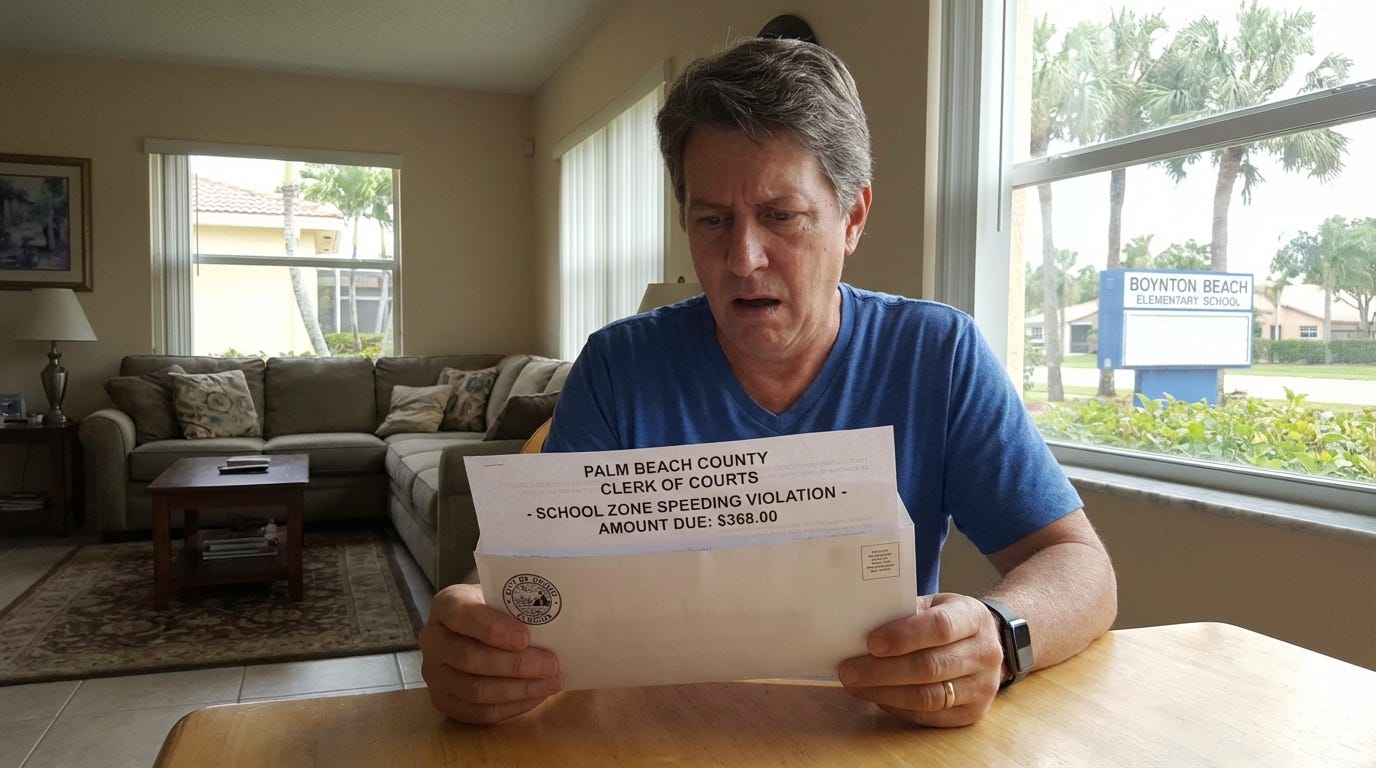
The result has been growing suspicion that the cameras are less about safety and more about generating revenue. While exact figures specific to Boynton Beach have not been released, Palm Beach County statistics show approximately 827,000 citations have already been issued, producing nearly $66 million in fines.
City and county officials maintain that the purpose of the program is straightforward: deter speeding and protect children during the busy morning drop-off and afternoon pick-up periods. Few residents dispute the importance of school safety. However, the rapid rollout of automated enforcement has sparked a broader debate about transparency, fairness, and whether the system is operating the way it was originally intended.
For drivers who receive a school zone camera citation in Boynton Beach, community members suggest taking a few simple steps before immediately paying the fine. First, review the citation carefully. Check the exact time of the alleged violation and the camera location, and compare those details with posted signage and enforcement hours.

Meanwhile, the issue may soon see changes at the state level. A new bill moving through the Florida Legislature aims to address several concerns raised by drivers. The proposal recently cleared its first hurdle last Thursday and includes measures that would require flashing beacons to activate the reduced school zone speed limit and extend the response time for citations from 30 days to 60 days.
For now, the debate surrounding school zone cameras continues. For many drivers, the controversy isn’t simply about speeding tickets—it’s about whether the system meant to protect children is also treating motorists fairly. If the proposed legislation moves forward, it could reshape how these cameras operate and bring some clarity to a situation that has left many residents questioning the rules of the road.
It would be interesting to see someone post a copy of their ticket. We know, by federal law, spedometers read 2~5% high as a safety margin. So in a school zone having a 30 mph limit outside of morning and afternoon times, a driver would have to be driving 10 over, which is 40 mph. So the speedometer would likely be reading 41~43 mph.
The rules are simple -- 5's great, 10's bait.