

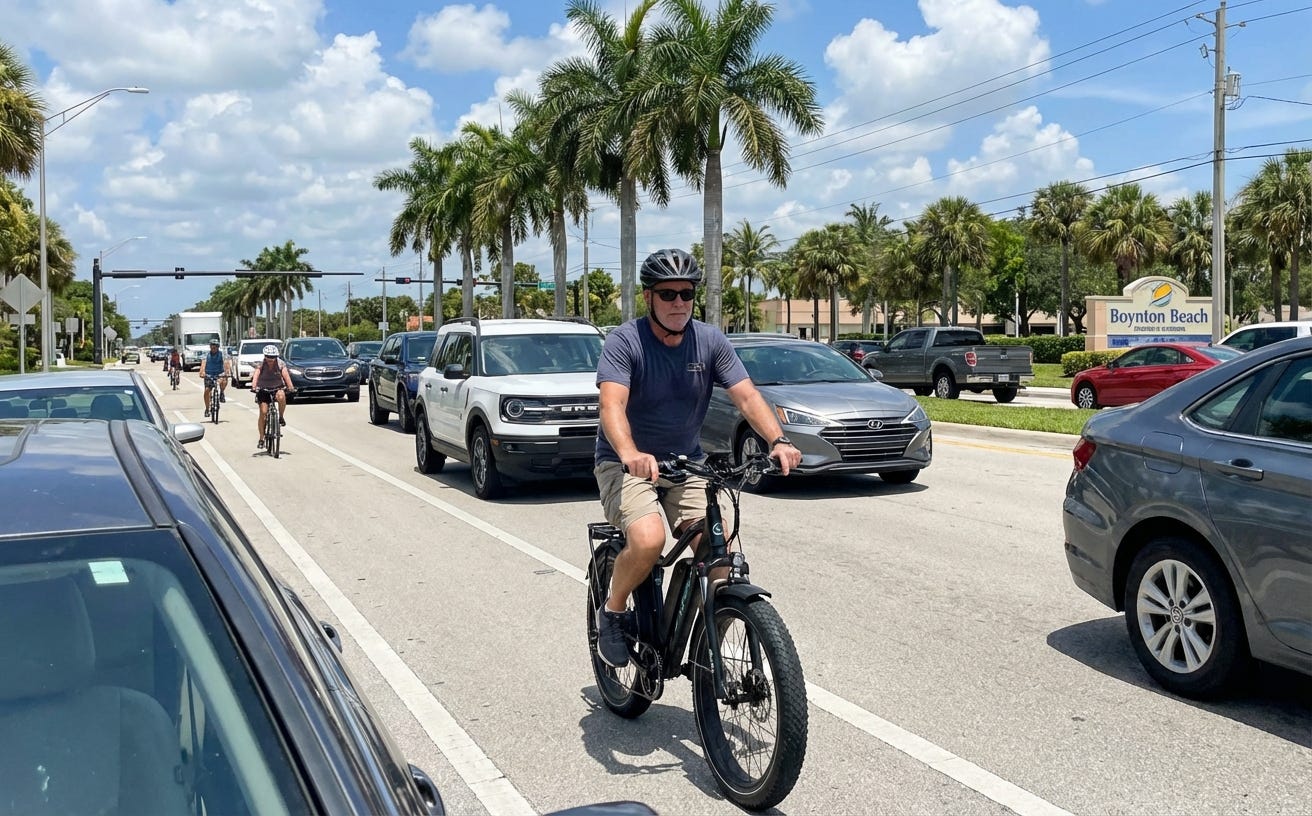
The complaints arrive at Boynton Beach police headquarters almost daily: e-bikes zipping past startled pedestrians, scooters abandoned across sidewalks, riders weaving through crowds at dangerous speeds. For many residents, a simple walk has become an exercise in dodging electric vehicles.
Now city officials are ready to do something about it.
While Florida lawmakers debate new e-bike restrictions in Tallahassee, Boynton Beach isn’t waiting around. Local police and city leaders are crafting regulations that could exceed whatever the state eventually passes—but the proposed rules have sparked a heated debate about what real safety actually looks like.

The Proposed Changes
The new ordinance would ban e-bikes and scooters from sidewalks entirely, requiring riders to use bike lanes, streets, or designated paths instead. Enforcement would escalate progressively: a warning for the first offense, a $25 fine for the second, and $50 for subsequent violations.
The city also wants to regulate parking and storage, ensuring that accessibility ramps and pedestrian pathways aren’t blocked by carelessly ditched scooters and bikes.
To support the transition, officials are planning public education campaigns aimed particularly at young riders and their parents—public service announcements designed to clarify where e-bikes and scooters can legally operate.
The Safety Paradox
But here’s the problem: not everyone agrees these rules will actually make things safer.
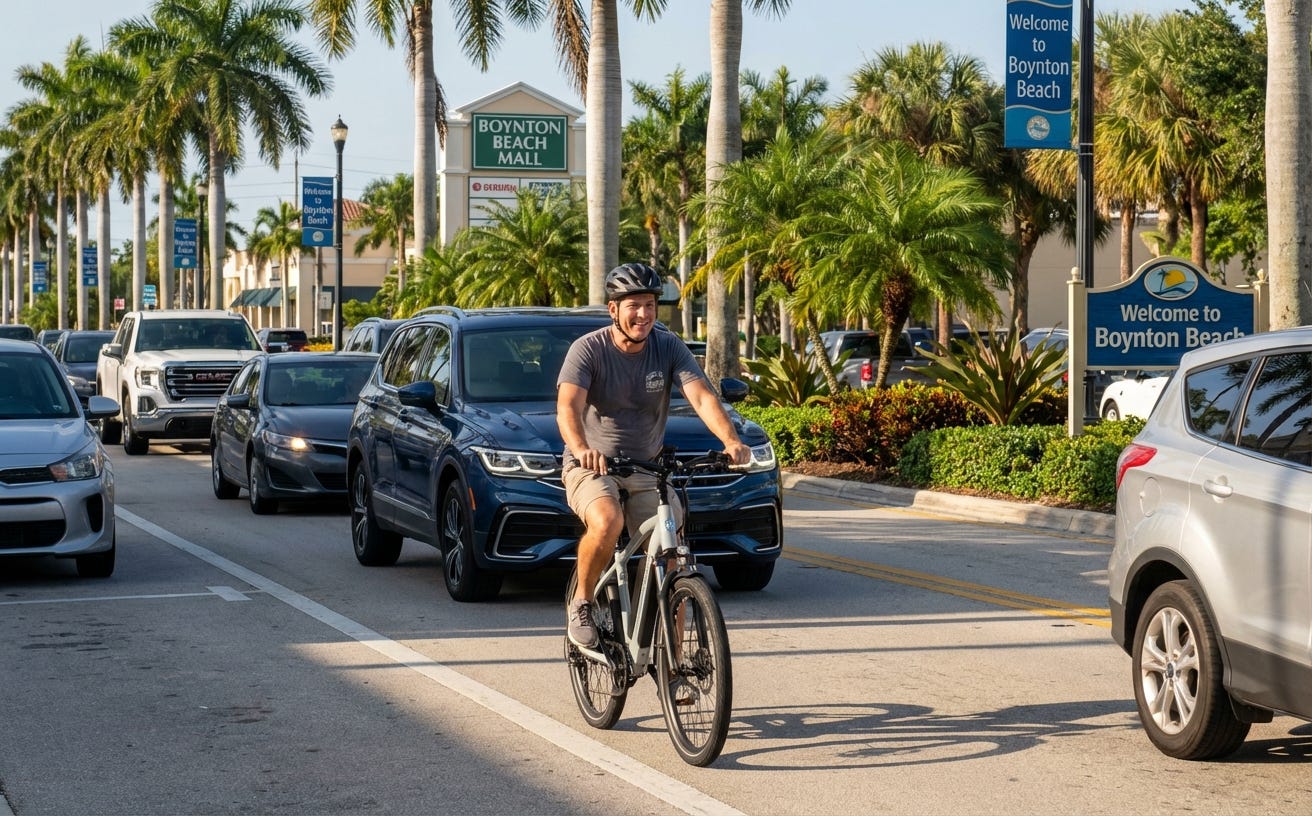
Many e-bike riders argue that forcing them into traffic creates more danger than it solves. The reality is that not all Boynton streets have bike lanes, and even those that do present serious challenges.
As an avid cyclist who rides throughout the city regularly, I can attest to these concerns. Distracted drivers checking phones, narrow riding spaces hugging the curb, roads littered with debris that can instantly flatten a tire—these are daily realities for cyclists in Boynton Beach.
Even the city’s best bike lanes require constant vigilance. The narrower ones? They demand something closer to a survival instinct, especially after dark. Sharing the road with distracted motorists isn’t just uncomfortable—it’s genuinely hazardous.
The safety argument cuts both ways. Pedestrians absolutely deserve protection from speeding e-bikes on sidewalks. But without adequate infrastructure, pushing riders into traffic may simply shift the danger rather than eliminate it.
What Happens Next
Discussions are ongoing, and the final details haven’t been set. Officials are still determining exactly what the new regulations will include and when they’ll take effect.
What’s clear is that Boynton Beach, like many cities across America, is grappling with how to integrate a transportation revolution that arrived faster than laws and infrastructure could adapt. Balancing pedestrian safety with rider safety won’t be simple, but finding that balance is essential.
We’ll continue monitoring these developments and will update you as the city moves toward a final decision. Return to February 17 newsletter by clicking here.

Dedicated bike and e-bike lanes are the real solution here.
Cities like Montréal have shown that protected bike lanes reduce injury risk by about 28% compared to similar streets without them, and they attract more riders at the same time. Here is the peer-reviewed study:
https://pmc.ncbi.nlm.nih.gov/articles/PMC3064866/
Paris has massively expanded its protected bike network over the past decade, and cycling has surged as a result. International transport research consistently supports separating vulnerable road users from vehicle traffic as a core safety strategy:
https://www.itf-oecd.org/sites/default/files/docs/monitoring-progress-urban-road-safety-2022.pdf
The issue is not more rules on paper. Distracted driving laws already exist, yet phone use behind the wheel remains widespread:
https://www.nhtsa.gov/risky-driving/distracted-driving
And we don't need a study to prove what we already know:
Laws do not physically separate a distracted driver from a cyclist.
Infrastructure does.
If more people are riding bikes and e-bikes, which they are, then cities should respond with dedicated, physically separated lanes that remove conflict with cars.
That is what improves safety in the real world.
Why not Boynton Beach?
No, they are talking more rules, fines & fees instead of real solutions.