

Florida’s Road Rules Are Changing: Speed Limits, Digital Registration, and Noise Crackdowns
Florida drivers may soon experience some of the most significant changes to state traffic law in years. During the current legislative session in Tallahassee, lawmakers advanced several transportation measures that could reshape how Floridians drive, register vehicles, and navigate traffic enforcement. The Florida House has already passed the legislation, which is now working through the Senate. If approved, the bills would head to the governor’s desk and, if signed, take effect in July 2026.
The most sweeping changes include higher highway speed limits, the elimination of yellow registration stickers, and a new prohibition on excessive engine noise in populated areas.
Faster Highways
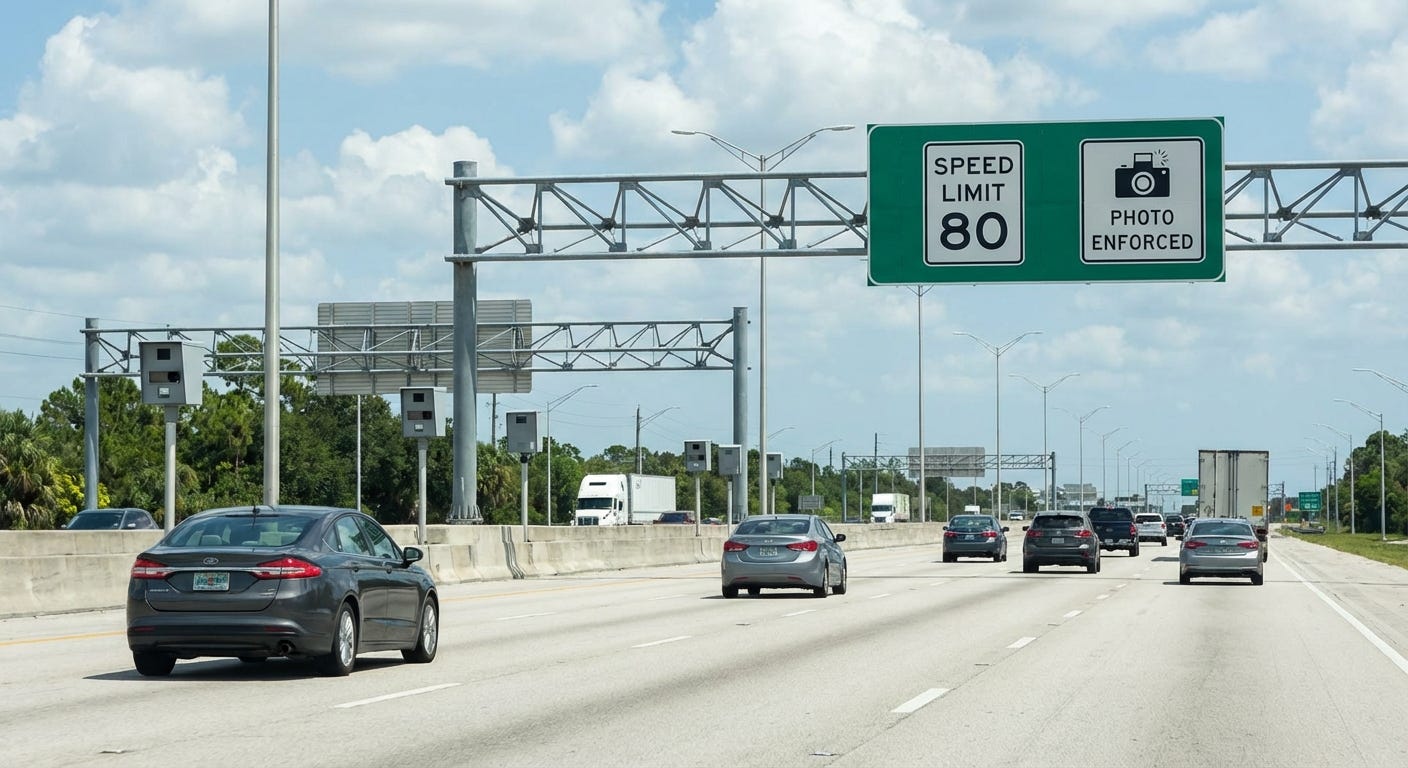
One of the bill’s most debated provisions would raise maximum speed limits on limited-access highways — including the Florida Turnpike and interstate highways — from 70 mph to 80 mph. Speed limits on rural highways could also increase, from 60 mph to 70 mph.
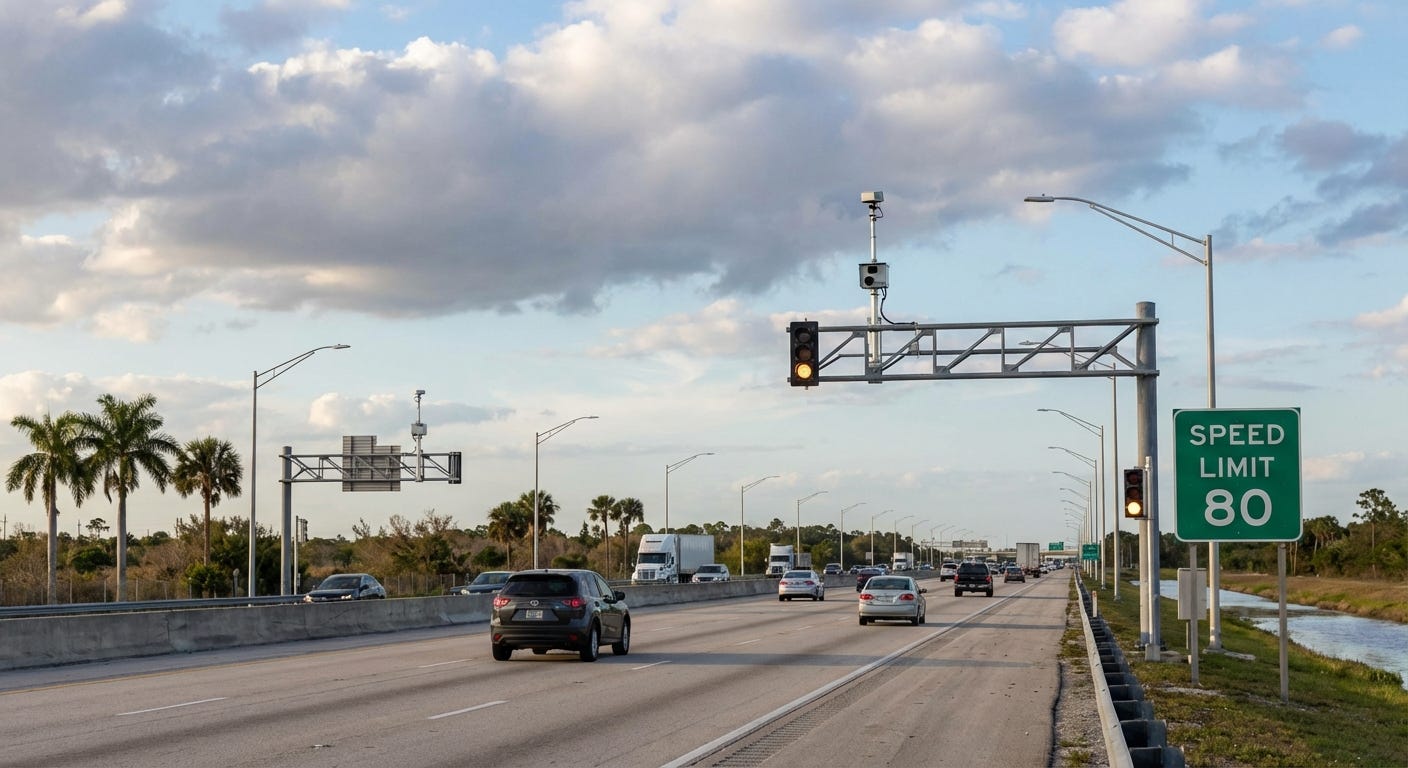
Supporters argue the change simply aligns posted limits with how most drivers already travel, and that clearer expectations could improve traffic flow. Critics counter that higher speeds reduce reaction time, increase stopping distances, and raise the risk of fatal crashes. If enacted, Florida would join a number of western states where 80 mph limits are already the norm.
The End of the Yellow Sticker
For decades, Florida drivers have been required to display a yellow validation sticker on their license plate as proof of current vehicle registration. That familiar fixture may soon disappear. Under the proposed legislation, the state would move to a fully electronic verification system, eliminating the physical decal entirely.
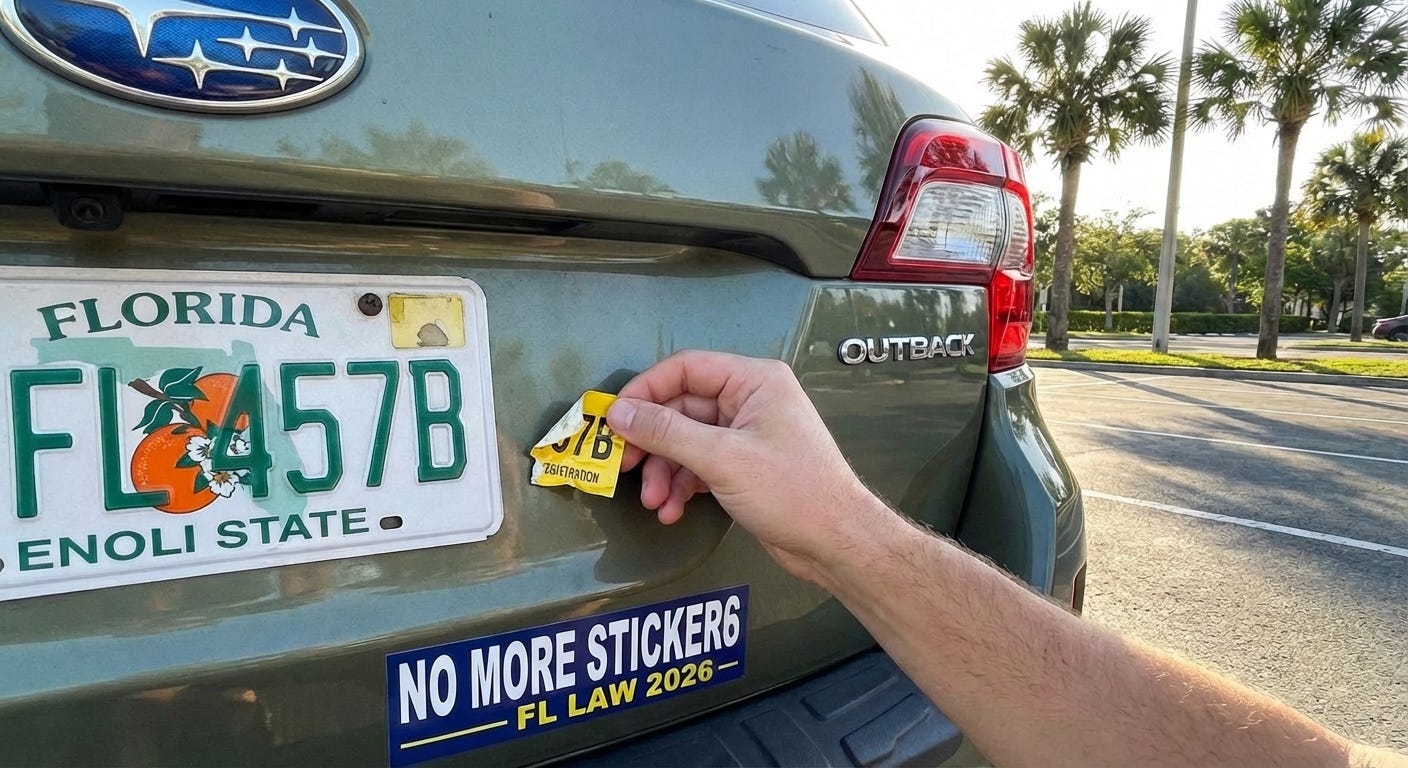
Proponents say the switch would save money for county tax collectors and the state, reduce sticker theft, and spare drivers from fines when their registration is current but the decal has expired or gone missing. The change is largely a formality in practice — law enforcement already uses digital systems that instantly confirm a vehicle’s registration status, making the sticker redundant.
License Plate Reader Cameras on Private Property
A separate provision would permit the use of automated license plate reader cameras on certain private properties, subject to rules governing how the data is stored and used. These systems are already common in shopping centers, parking garages, and gated communities, where they are used to track stolen vehicles or identify suspects connected to criminal investigations.
Cracking Down on Engine Revving
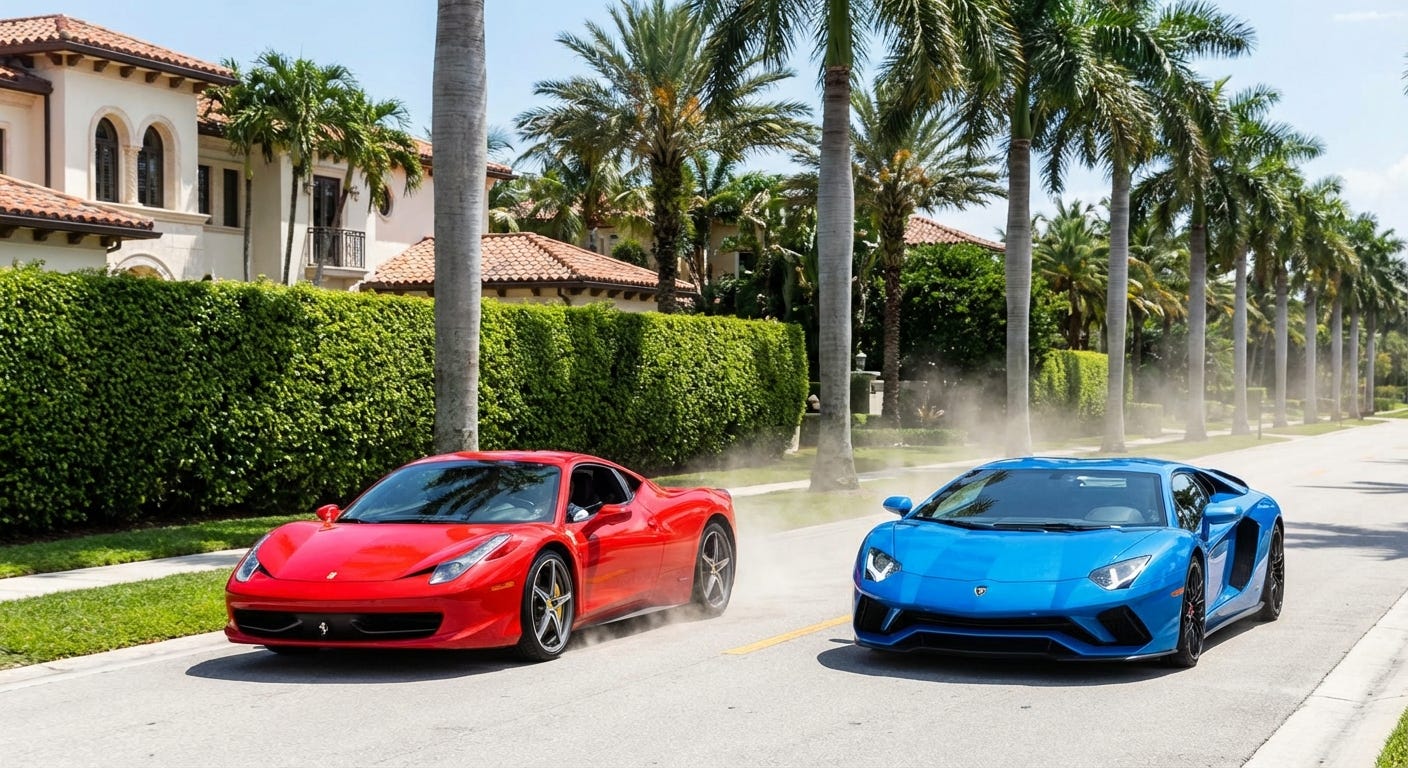
Another provision takes aim at a noise problem that has grown increasingly contentious in communities across the state. The legislation would make it illegal for drivers to intentionally rev engines or accelerate in ways that create excessive or unusual noise, particularly in towns and cities. The measure targets behaviors commonly associated with street racing culture, modified exhaust systems, and aggressive revving at traffic lights, in parking lots, and in residential neighborhoods — often late at night, when the disruption is most acute.
Organized automotive events are explicitly exempt. Car shows, for example, operate in controlled environments where engine noise is part of the experience — and very much the point. A local example is the annual Muscle on the Beach Car Show in Delray Beach, where the “noon rumble,” a moment when all the engines roar in unison, is one of the event’s most anticipated traditions. That kind of celebration is not what lawmakers are targeting.
The focus is on the spontaneous, disruptive noise that residents have long complained about — the kind that rattles windows at midnight and has proven difficult for authorities to address. The new law would give law enforcement a concrete tool to cite offending drivers and restore some measure of quiet to affected neighborhoods.
If signed by the governor, all provisions are expected to take effect in July 2026.